Why most to-do apps fail by Friday
August 5, 2026 · 4 min read
On Monday morning the list is a work of art. Twelve items, ordered by priority, maybe a fresh project called "this week." Tuesday holds. On Wednesday three items roll over. By Friday you haven't opened the app since Wednesday lunch, and opening it now feels less like planning and more like being shown evidence.
If that cycle sounds familiar, the problem probably isn't you. Most to-do apps share a structural flaw, and it fails on a schedule.
The Monday-enthusiasm curve
A new list runs on the motivation you had when you wrote it. Monday-you supplies the fuel; the app supplies storage. Nothing in a standard to-do app generates motivation. It only spends what you brought.
And motivation decays across a week for ordinary reasons: a short night, an afternoon that gets away from you. By Thursday you're running Monday's twelve-item plan on a fraction of Monday's fuel. The plan didn't get worse. The fuel ran out, and the app had no way to make more.
A checkbox pays you later, in abstraction
Look at what happens at the exact moment you finish a task. You tap a box. The item grays out, and your eye lands on the next undone item. That's the whole payoff: a subtraction, followed immediately by a reminder of what you still owe.
The task's real reward sits even further away. Exercise pays out in months. A clean inbox pays out in nothing you can see. So the loop runs: effort now, abstract mark now, actual payoff someday. Research suggests this is backwards. Woolley and Fishbach (2017) studied people pursuing long-term goals, including New Year's resolutions, and found that immediate rewards (enjoying the activity itself) predicted whether people kept going, while the importance of the delayed benefits predicted intentions more than follow-through.
Willpower can bridge that gap for a few days, which is exactly why the system works Monday and fails Friday. It was never self-sustaining. It was coasting.
Meadow is built around the opposite loop: finish a real goal and coins drop that instant, ready to spend on seeds in a pixel-art garden. More on what that changes below.
A broken streak with no way back
Streaks are the one immediate reward most apps offer, and they're built like glass. Miss day 14 and the counter reads zero. Two weeks of evidence, gone from the interface overnight.
Apps handle the break in one of two ways, and each has a cost. Some sell recovery: streak freezes and repair tokens. The number survives, but it hollows out, because a streak you can buy back stops being a record and becomes something the app monetizes. Others reset you to zero with nothing left behind, and that's where the quitting happens. Restarting after 14 days feels worse than starting on day one ever did, because this zero has a memory attached.
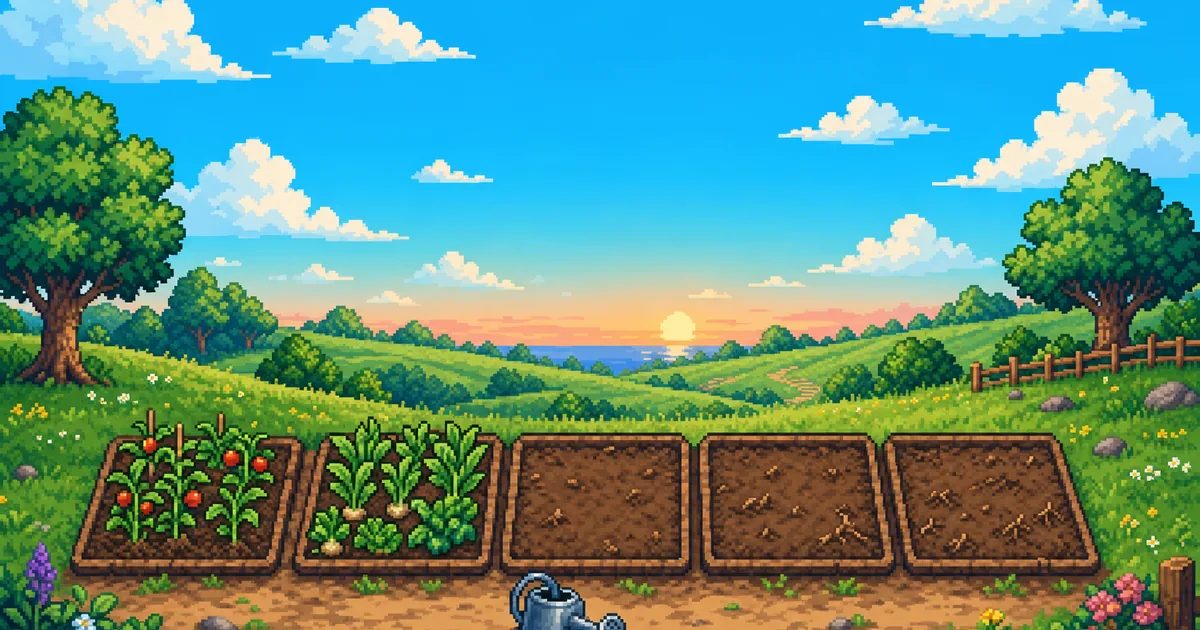
What's missing in both designs is progress that outlives the counter. In Meadow, the streak resets when you miss a day, and nothing you can buy will undo that. But the coins you earned were already spent on something durable. The garden is still there, crops standing, land yours. The streak tells the truth about consistency; the garden tells the truth about accumulation. You need both, and most apps only show you the fragile one.
The list turns into an accusation
There's a moment, usually midweek, when a to-do list changes character. Items roll over once, then twice. The list stops describing the future and starts documenting the past, specifically the parts you didn't do. Opening the app now runs a small audit, and the audit always finds against you.
So you stop opening it. You stop because the app has become the one place on your phone that reliably makes you feel worse, and a system you avoid opening is dead no matter what its feature list says.
Notice the asymmetry underneath. A to-do app has no surface where finished work accumulates. Completed items vanish into a Done view nobody visits, while unfinished items roll forward in bold. The emotional bookkeeping records only debits. A garden inverts that. Every coin spent is a completed goal made visible, so opening the app starts with what you did instead of what you owe.
What changes when the reward is instant
Flip the timing and the week runs differently. In Meadow, finishing a goal drops coins at that moment, and the coins buy things that visibly change: 11 crops with six growth stages each, priced so choices matter. A carrot costs 2 coins and sells for 8. A pumpkin costs 8 and sells for 26, which makes it something to save toward. The stakes are small on purpose. What counts is where the reward lands, at the moment of completion rather than at Sunday's review.
Two details keep the loop honest. A goal can require photo proof: the app asks for a photo and checks that it matches the goal, so a completed goal means the thing happened. And the day's hardest task, the first one, gets structural help. Morning Lock blocks the apps or websites you choose until the morning goal is done, with an exit if you need one: a short timed break paid for with coins you already earned.
None of this writes the list for you. You still have to choose few enough goals that Friday-you can face them; no reward schedule survives a thirty-item day. What changes is who carries the load. In a checkbox app, willpower does all the carrying all week. In a loop that pays at the moment of completion, the app carries some of it, and the difference shows up exactly where the old system broke.
If your list keeps dying midweek, Meadow runs the loop the other way. Start it on a Monday.